Warm Winter = Pre-Emergent Need for Atlanta Lawns

The really warm winter we are experiencing is causing a real need for the application of a pre-emergent on your lawn. A pre-emergent is a chemical that once applied to the lawn forms a barrier at the top of the soil that prevents the germination of weed seeds; thus preventing those obnoxious weeds in Atlanta lawns and shrub beds. The warm weather is promoting an earlier than normal germination of these seeds. This necessitates an immediate need for the application of the pre-emergent. Apply now Atlanta!

Winter weeds, such as Poa annua, will not be prevented or eliminated by this round of pre-emergent, as they have already germinated. These winter weeds should be sprayed with a post-emergent selectively to remove them, especially in warm season lawns like Bermuda & Zoysia. To prevent Poa annua in the future, apply a pre-emergent in the fall to prevent this and other winter weeds.

If you have a new Fescue lawn, be careful. I would not recommend using a pre-emergent until next year. The new tender Fescue plants can be harmed by a pre-emergent.

The prevention of crabgrass starts now. A pre-emergent is your best chance at prevention of this resilient summer weed.

A pre-emergent is fairly easy to apply. You can apply it yourself with a little effort, proper knowledge and equipment; or you can call an expert in this field. If you would like to have a quality lawn management company apply this for you, we recommend: Top Turf. You can contact them at www.topturf.net or you may email Bob Jones at bjones@topturf.net. We know this company will provide you quality service at competitve prices.

If you would like  to discuss your landscape needs in more detail, call us for a FREE CONSULTATION at:——————————— 770-569-5900.

Posted in Landscape Maintenance | 1 Comment

Maintenance 101: Two Ways to Maintain Crape Myrtles

Crape Myrtles are abundant in Atlanta landscapes and across the Southeast. They are a very traditional  plant/small tree for  southern gardens. They have a lot of positive attributes starting with the most obvious; flowering most of the summer,  a very interesting bark that exfoliates, nice fall color, and an upright habit that allows it to be used in many different applications. They come in many different colors from white to red to purple. This time of year is when the age-old debate begins—-”to prune or not to prune” the Crape Myrtles. There are 2 basic ways to manage your Crapes. Many people prune off all of the previous year’s growth and force the plant to produce new shoots in Spring to flower on. Others prefer to leave the tree alone and not to prune the tops at all, just pruning the suckers/shoots of the trunk and from the root area. Both ways are acceptable.

How do you decide which way to manage your Crape? The answer is most likely to be found in the placement of the specific tree(s) in question. For example:  If your tree is in a residential setting, you may want to prune it every year to keep the tree from getting to large for the space/yard. Crapes can get 30′ tall and 20′ wide if left alone. This may be too large for some areas in your yard. If it is in front of the house it could block the view of the house and this may be undesireable. Pruning it every year keeps these problems at bay. On the other hand, if you have a large area you may want to leave it alone. They grow into beautiful, full, vase-shaped trees. Also by not pruning you avoid the “knuckling” effect. This occurs when the tree is pruned at the same place on the limb every year. Roundish “knuckles” develop as the tree attempts to heal from the cut and these can be unsightly. An unpruned, or natural growing Crape Myrtle, is a beautiful tree. You see these frequently in Charleston, SC,  Savannah, GA, and other southern cities. Around Atlanta, it seems popular for the maintenance companies to prune the Crapes. This does produce a very manicured look and even a sculpturistic appearance when pruned properly.

So, in summary, prune your Crapes or not, either way is correct. Decide the look you wish to obtain and let that be what dictates how you manage your Crapes. Happy Landscaping!

If you would like a FREE CONSULTATION, call us at 770-569-5900.

Posted in Landscape Maintenance | 1 Comment

Boulders in Atlanta Landscapes

Rocks are great!!! Boulders can add a lot to Atlanta landscapes if properly used. Boulders with moss and lichens on them, and with interesting shapes, should be the rocks selected for naturalizing a landscape. They can also be used as a focal point or accent pieces. Boulders from the North Georgia/Tennessee/North Carolina mountains are most frequently used around Atlanta and available at many landscape supply companies. Adding a few rocks can bring a nice element to a landscape that might need a little spice.

There are a few things to know, however, prior to adding boulders to a landscape. Most rocks are harvested from the surface and when installed should go back into the ground the way they were naturally. This is easier said than done. The Landscape Architect or contractor must “read” the specific boulder to be placed and install it as close to how it was found naturally as possible. This will create the proper look. Too frequently they are turned sideways, upside down, or just plopped down by an untrained installer. This is what I call “looks like it fell out of an airplane and where it hit you left it”. Obviously, this is not the way to obtain the desired appearance. I have learned over the last 30 years, that it takes some natural talent to able to place boulders correctly. And—-not everyone has this ability!

Different sizes of boulders should also be used when creating a rock outcropping. Small, medium, and large rocks should be used in this situation to create a more natural appearance.

Another nice touch is to place the boulders in such a manner to allow the lawn to come right up to the base of the stone. Backfill the back side of the stone with soil and then place the plant materials behind the rock. This will insure visibility of the rocks. Too often, plants are installed in front of the rocks and soon grow to hide the view of them.

If you would like a naturalized landscape, Pollock & Associates, Inc. specializes in natural landscape design. We have installed “tons” of boulders in landscapes and waterfalls throughout the Atlanta and North Georgia area. Call today for a FREE consultation——770-569-5900.


Posted in Boulders in the Landscape | 2 Comments

Great Plants for Fall Interest in Atlanta Gardens

There are numerous plants to consider for Atlanta and North Georgia that will bring seasonal interest to your garden. There are plants with flowers, with colorful leaves, interesting limb structure and fragrance.

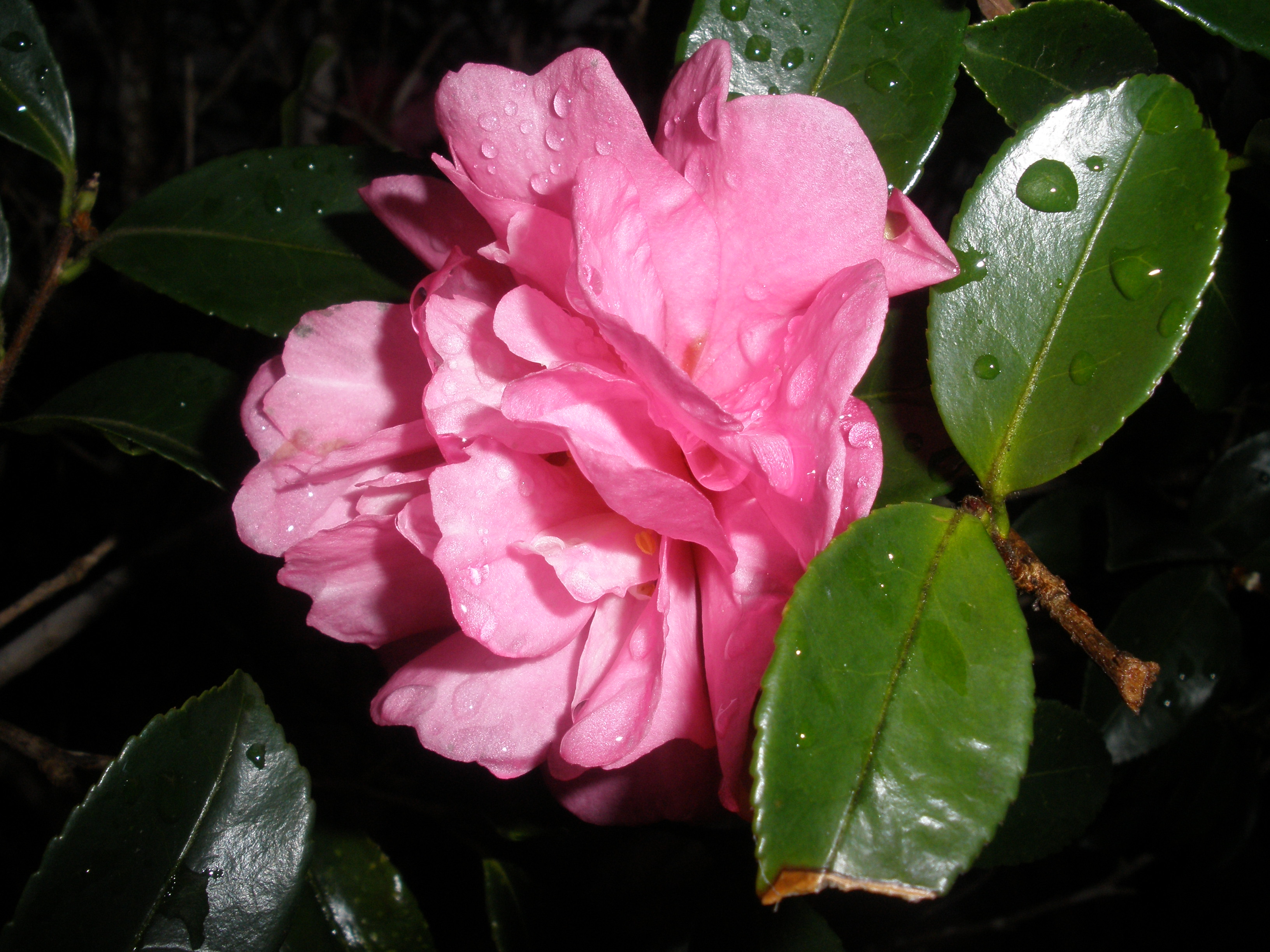
To begin with—-it’s hard to beat the Camellia ‘Sansanqua’, or fall blooming Camellia. The wide variety of beautiful flowers available on these shrubs is wonderful. From dark reds to light pinks, from solid white to lavenders,  many different colors are available.

The flower size is approximately 3″-4″ and a little looser than the Camellia ‘Japonica’ which flowers in late winter/early spring. The ‘Sansanquas’ typically flower, in the Atlanta area, in late October thru December, depending on how early the real cold freezes arrive. It’s especially nice to have flowers out of the garden for Thanksgiving and Christmas. Not many other plants flower at this time. The Camellia is also a nice medium to large growing evergreen shrub with medium texture. It looks good all year. They are easy to take care of, requiring a little pruning and a little fertilizer. Most varieties will take partial shade to full sun preferring a little protection from the late afternoon sun. They are excellent when used at the corner of a house or for an evergreen screen. Some varieties to consider:—’Pink Snow’—grows fast, larger variety, profusely covered with light pink flowers;  ‘Yule-Tide’—-a slower grower, smaller size, more compact, with reddish flowers and orange centers;  and ‘Snow’—a pure white flower on a dark green large growing plant.

There are literally hundreds of varieties to choose from. I’m sure there is one for you. You can’t go wrong with Camellias. They smell good too!

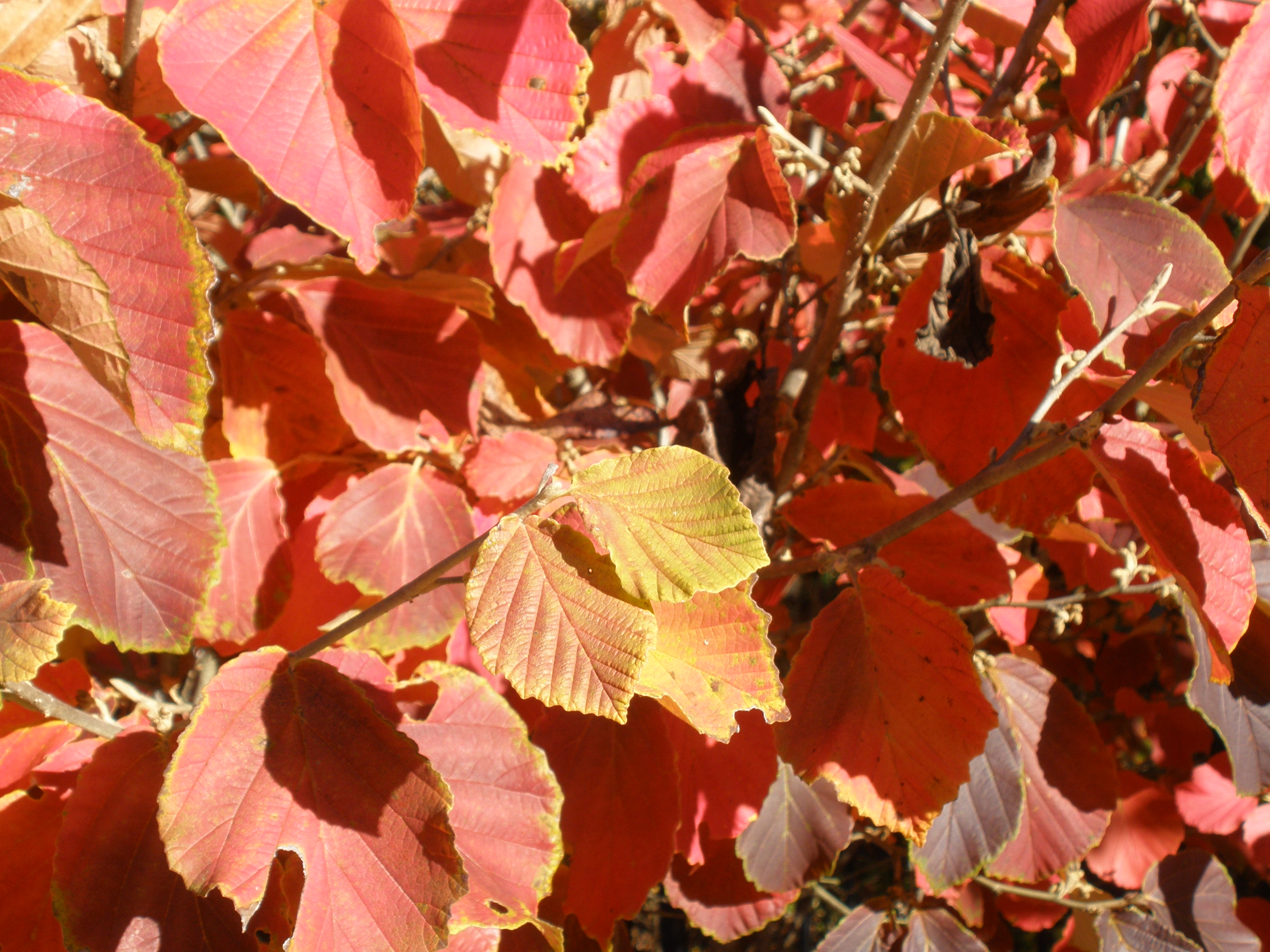
Another plant to consider is the Witch-hazel ‘Diane’. This variety of Witch-hazel is spectacular. It is without a doubt one of the best plants for fall color.

A 6′-8′ tall by 6′-8′ wide plant, has big leaves–6″-8″ long. This plant turns orange-red-purple all at the same time. This is a seldom seen plant, but is available and should be used more often. It is very low maintenance also.

I hope these (2) plants help you select a  shrub for Fall interest for your garden. If you need further assistance, we are here to help you. Call us for your FREE CONSULTATION at:   770-569-5900.

Happy Gardening!


Posted in Georgia Garden Plant Materials | Leave a comment

Budgets are Important when Designing Atlanta Landscapes

$$ Dollars $$———This is a subject that a lot of Atlanta Landscape  Architects are hesitant to discuss. I think it is critical to discuss this topic in detail when gathering my design criteria during the initial visit with a potential/existing client. Understanding the financial aspects of the project are just as important as how creative the design will be.

The design work must represent a solution that can be implemented within the client’s budget. If this is not accomplished, (in my opinion), the Architect did not perform very professionally. Here’s my example:

 A client has $50K to $60K to spend on improvements and that is understood by all parties. The architect and client(s) go back and forth developing a plan that all are very happy about. Now it’s time to bid the work to contractors. (3) bids are received. All of the bids come in form $80k to $100K! NOW WHAT? What is the client going to do with this plan that he can’t build because it is so expensive. He can’t afford it. The plan came in at 50% to 100% over budget! Now everybody involed is going to be unhappy. The client doesn’t want to pay for the plans. The Architect wants to be paid for his time and says, “you approved the plans as we were going along”. WRONG! How can the Architect expect the client to know how much things are going to cost while it is being designed? The Architect is supposed to direct the project and the client to insure the budget is taken into consideration.   Solution:   The Architect must design within the budget and must understand construction costs!

Pollock & Associates, Inc. prides itself in designing within budgets. We understand this business piece of our industry and work diligently to keep on target. Our clients are involved throughout the development of the plans and are aware of the associated construction costs. If you are in need of plans for improvements and do not know how much your ideas will cost, we can assist you with this also. Call today for a FREE CONSULTATION and we will meet and discuss your Landscape Architecture needs. 770-569-5900.

Posted in Landscape and Hardscape Plans | Leave a comment

Maintenance Consulting Services at Pollock & Associates, Inc.

Landscape maintenance is extremely important and often overlooked or taken for granted. Typically, we go out and prune the shrubs or cut the grass the same way over and over. After a few years this results in what I call a “tired landscape”. Proper maintenance techniques will prevent this from happening and with the appropriate direction/knowledge we can prevent the “tired” look on your property. Our thought is that a landscape needs to be “Managed” not “Maintained”. If you are pro-active to handle situations in the landscape before they become problems, you can avoid costly repairs or replacements.

Pollock & Associates, Inc. offers a Consulting Service to assist residential and commercial owners in managing their landscapes. We inspect each property and prepare a report outlining in detail each area of the site is to be dealt with. This could be transplanting daylilies from underneath a shrub  to another location in the sun, to hard pruning a holly that has gotten too large, to removing lawn that is now in too much shade from trees that have grown. By handling these items as they occur as opposed to waiting until there is an obvious problem, you can avoid costly repairs.

We visit each site on a scheduled basis, (once every 3 months, every 4 months, or twice a year), as dictated by the needs of each site. We inform the owner of our recommendations with a written report and assist in acquiring the proper contractors to perform the necessary adjustments.

The Atlanta/North Georgia landscapes evolve rapidly and it is very important to keep up with the changes occurring to keep your landscape healthy and beautiful for years to come. Call us today for your FREE initial consultation at: Pollock & Associates, Inc.  770-569-5900

Posted in Landscape Maintenance | 2 Comments

Fall Landscape Installations in Atlanta

It’s late September and Fall is here! What a great time of year; football, cool mornings and warm afternoons, and planting season. It is a great time to plan for your Fall/Winter landscape additions or enhancements. In my professional opinion, the best time for the installation of new plant material is late Fall and Winter for the larger materials and then early Spring for the small plants such as the perennials and small shrubs or ground covers. This separate planting schedule helps to prevent losing plants to the cold blasts Atlanta and North Georgia can get during the Winter. The larger plants are self-insulating and generally make it through these cold snaps. However, the smaller plants’ rootballs freeze solid, bursting the root hairs and destroying the capability of the roots to function properly upon thawing. The plant dies! This is not due to poor quality plants or contractor error: just plain and simply they “froze to death”.

So, phase your installation times if possible and I’m sure you will have more success with the survivability of your new landscape. Now is a great time for planning your new landscapes.

Pollock & Associates, Inc. can provide you or your friends with a comprehensive master plan that will allow you to phase the implementation over this Fall, coming Spring, as well as future years as necessary. We offer a free initial consultation, so call today to set up an appointment. We look forward to meeting with you!

Posted in Landscape Installation | 4 Comments

Re-seed Your Fescue lawns Now—-Atlanta

It’s the second week of September. The summer heat is all but over. Now is the time to re-seed your Fescue lawn. September 15th is typically the date to begin your re-seeding in Atlanta and North Georgia. Now is the “prime” time to re-seed. Fall is the best time for this, and getting a jump on it now helps allow the new seeds establish a stronger root system before the winter begins. There are a few things to consider, however, before you apply new seed.

First—make sure you purchase fresh new seed harvested this year. Check the label and date and get the lowest percentage of weed seeds as possible also.

Second—the soil must be prepared to receive the seed and promote germination. If you just throw seed on top of the ground, you will probably just be feeding the birds! You need to aerate the soil thoroughly. You can rent an aerator or hire a landscape contractor to do this for you.

Third—apply the seed evenly with a proper spreader. Follow the directions on the bag for the setting for your spreader.

Fourth—make sure to add a balanced fertilizer and lime at the time you re-seed. A balanced fertilizer would be 10-10-10 or 13-13-13.

Fifth—water thoroughly/regularly, and sit back and watch it grow. I do not recommend you apply wheat straw. Wheat straw has a lot of weed seeds in it and they will germinate with your Fescue seed, and then you wind up with weeds in your new lawn.

Fescue likes cooler nights and mornings with warm sun in the afternoon. By mid-September this is usually the situation in Atlanta.

Many reputable landscape contractors are available to do this work for you. If you need help in selecting a contractor, please call us at:                      Pollock & Associates, Inc.—————–770-569-5900

Posted in Landscape Maintenance | 3 Comments

Season Ending for Installation of Warm Season Sodded Lawns.

Summer is almost over. The record heat of this summer in Atlanta and Georgia, is starting to back down a little. Believe it or not, Fall is just around the corner. Cooler daytime high temperatures are coming soon as are the refreshing cooler mornings. This is very important if you are wanting to re-sod your lawn. Do it now!!!! By September 15th, warm season lawns, (Bermuda and Zoysia), start to go dormant in the Atlanta area and north Georgia. These grasses love the hot weather and the longer daylight hours. It is best to install new Bermuda/Zoysia sod in the summer months to allow a period of time for the new grass to root in/acclimate before the Winter arrives. This helps prevent Winter damage/death to the new lawn. You can  install Bermuda/Zoysia even in the Winter months while it is dormant, you just add a higher risk factor to the survivability of your new lawn. Many times, however, schedules are such that we don’t have a choice. In these situations, just know there is a gamble involved and don’t get too upset if you loose some of the new sod. The contractor may have provided you with healthy grass and installed it correctly; Winter may still take it out. So—you can’t always blame the contractor, or expect it to be replaced under warranty.

Frequently, new sod is harvested in the Winter at a farm in south Georgia or south Alabama, and then brought to the Atlanta area and installed. It was growing in a milder climate, dug up and trucked to Atlanta, and layed on top of the ground of a landscape project. Then rudely, the very next night, it is having to endure sub-freezing temperatures because a cold front blew through. OUCH! This can cause damage to your new grass. The roots can freeze solid because of the moisture in them, burst, and then become non-functional. If these roots don’t function, the leaves of the grass  won’t stay alive. The new sod will die. This may not be completely visible until Spring when you expect to see your lawn greening up.

In summary—-try to install your new sod now, or wait if you can until next late Spring. If the construction schedule does not permit this, be more   understanding and knowledgeable of what you are attempting to do. This should help you be happier with your new landscape. Knowledge is a good thing. We may not like the outcome, but if we understand why it happened we are more content.

As always, I hope this is informative and helps you with your landscape. If you would like a FREE consultation about your landscape, call us at ——-Pollock & Associates, Inc.———770-569-5900.

Posted in Landscape Installation | 1 Comment

Homebuilder Landscape & Streetscape Plans by Pollock & Associates, Inc.

Pollock & Associates, Inc. has 29 years of experience working with Home-builders and Residential Developers in the Atlanta area and throughout Georgia. We started the company working with new home builders. Frequently we provide our Builder clients with a Landscape Package for individual homes or the entire subdivision, (a plan for each lot). This design service can prove to be very valuable in creating that professional, finished look enticing the potential home buyer to get out of their automobile and into that front door. Our plans are very carefully thought out to maximize each individual lot’s assets and to help conceal any negatives that may exist. Each plan will emphasize and compliment the architecture of the home. Budgets for Builders are crucial. Each plan is designed to meet, (not exceed), the established budget.

The challenge for Pollock & Associates, Inc. is to make the proposed landscape look enticing to he potential buyer, maximize the Builder’s budget, and compliment the architecture of the home without creating a high maintenance situation in the years to come. Often, basic plant materials are used in landscapes for new homes because you can get a bigger plant in a 3 gallon container for more immediate impact. However, a 3 gallon Cleyera under a 3′ high window may look good today, but is an absolute nightmare of a maintenance problem in a few years. A Cleyera wants to be 12′ high and 10′ wide, hence this is not the plant for this location. We recommend plants that will create the immediate impact desired but also will be long lasting and lower maintenance for the Owner. This is also better for you Home-builders because your product looks better in the future years to come and is not an overgrown mess. The Builder winds up with a better looking product and a better reputation.

Another interesting feature offered by having a Landscape Plan for each lot in a subdivision is that ultimately a “Streetscape Plan” is achieved, one lot at a time. By designing each lot, we can mesh the plans together to create a flowing streetscape that is consistent from house to house throughout the entire project. This is a very underrated element in most projects in the Atlanta area. The consistency created by this planning process is very noticeable and the project has a cleaner, crisper, more professional appearance that most home buyers desire.

Lastly—most Builders are not completely knowledgeable about what they are getting for the dollars they spend on their landscapes. Often it is whatever the landscaper supplies for the budget is what the Builder gets. Our plans eliminate this unknown. By specifying/detailing the plant materials the landscaper is held accountable for their charges and the Builder gets the most for his budget.

I hope this is informative to you and if there is interest in this service, please call us at, Pollock & Associates, Inc.  770-569-5900.

Posted in Landscape and Hardscape Plans | 1 Comment